Mayhew’s drive for knowledge of lost old master drawing materials and techniques has led him to pursue advanced studies in fine art at the Smithsonian’s National Gallery of Art in Washington, DC. Since 1993 he has been working with the museum’s curators of old master drawings researching the origins and uses of early renaissance drawing materials. For Mayhew, this research has included the first-hand study of the numerous old master drawings housed in the museum's archives. This study introduced him to many types of medieval and renaissance drawing materials of which many are, unfortunately, no longer available or in use today.

Natural Red Chalk

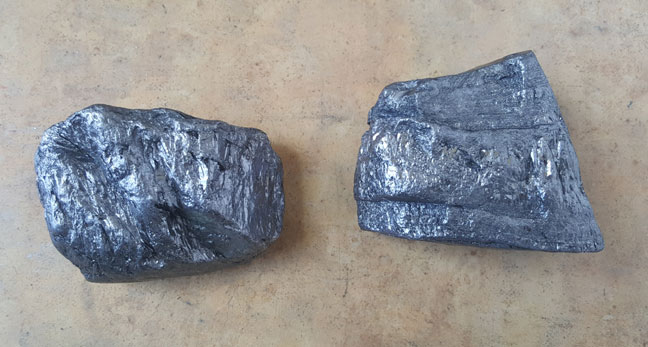
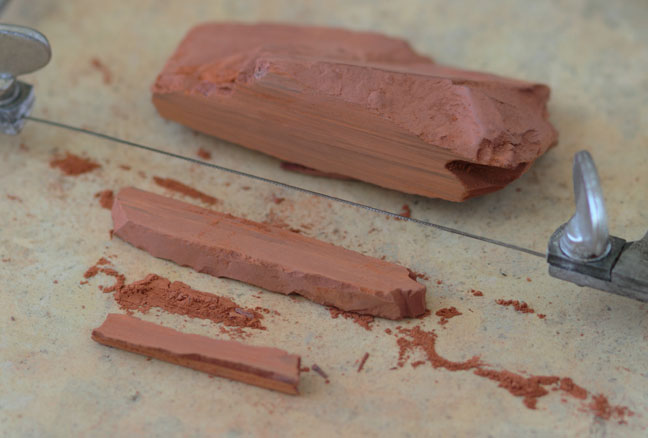
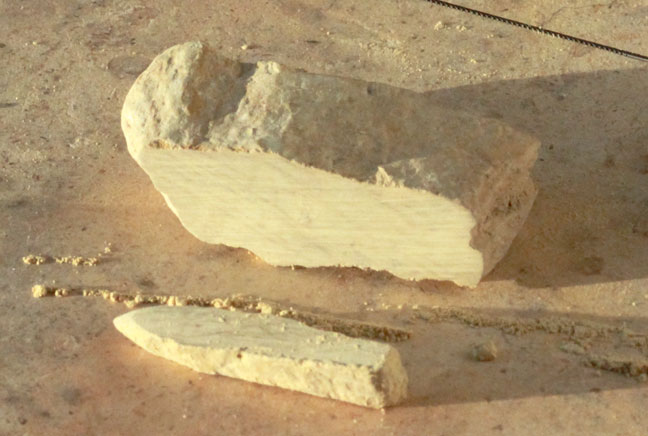
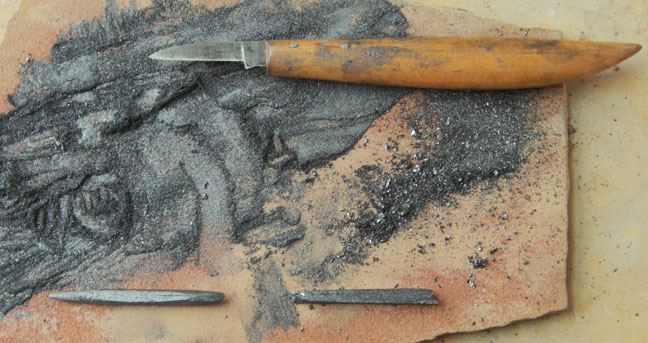
One very special old master drawing material was natural red chalk. Natural red chalk is a naturally occurring form of highly compressed and volcanically modified hematite. During the renaissance it was quarried directly from the earth and was, by its nature, inherently compact enough to enable it to be sawn into sticks suitable for use as a drawing medium of great precision and versatility.

Natural red chalk was first used for drawing on paper by Leonardo da Vinci in the late 1400s, but it soon became so popular that its use quickly spread to other artists such as Michelangelo, Raphael and many more. It did not take long for natural red chalk to become a favorite drawing medium used by the old masters throughout Europe. Unfortunately, there came about a great loss to the world of art when the use of natural red chalk gradually disappeared in the late 1700s. This disappearance was due to the fact that all of the known European deposits of the naturally occurring red chalk eventually became depleted.

In response to the art world's devastating loss of natural red chalk, the Frenchman, Nicolas Jacques Conte, worked to develop an artificially produced red chalk in 1795. He did this by heating iron filings in acid and mixing the resulting pigment with a binder. Unfortunately, Conte’s artificially-produced red ‘crayon’ doesn’t have the transparent glowing beauty nor the superior working properties that natural red chalk possesses. As a result, many artists of the time greatly mourned the loss of natural red chalk and searched in vain for new sources. The pre-Raphaelite artist, Edward Burne-Jones, sums up this loss by stating “Now the ancient red is a far more crimson and rosy tint than the dusty brown sticks they give us now, and I have understood always that the ancient red is exhausted and that we have fallen on evil days and can get no more of it, and as I am always asking about it of every colourman I meet, in vain…"[Memorials of Edward Burne-Jones, 1904, vol.2, p.322. I am gratefully indebted to Miriam Stewart, Assistant Curator of Drawings, Fogg Museum of Art, for bringing this quotation to my attention.]

Examining the drawings done in natural red chalk by artists like da Vinci, Raphael and especially Michelangelo left a big impression on Mayhew. He was very impressed by the glowing beauty, the fineness of line and the striking translucent chroma of the natural chalk; it is unlike any drawing media available today.

Determined to locate new deposits of natural red chalk, Mayhew has researched the specific features of the geology in the areas where the European natural red chalk was quarried in the 15-17th centuries. Next he sought out matching geological conditions in the United States of America. Using this information, mixed with several years of searching and exploration, he has been able to locate deposits of natural red chalk in the hematite-rich ancient volcanic desert southwest.

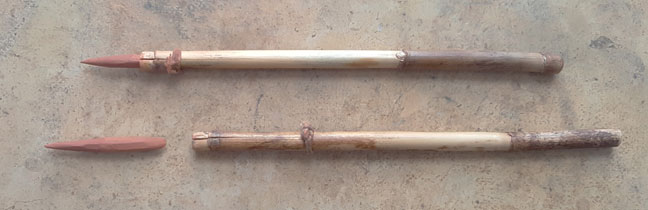
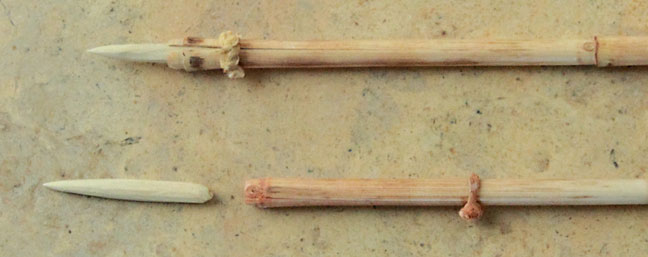
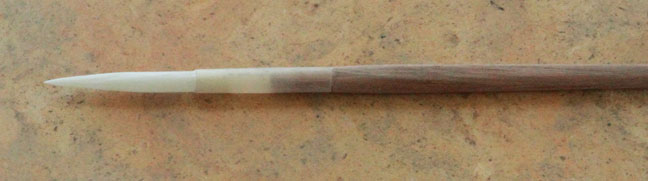
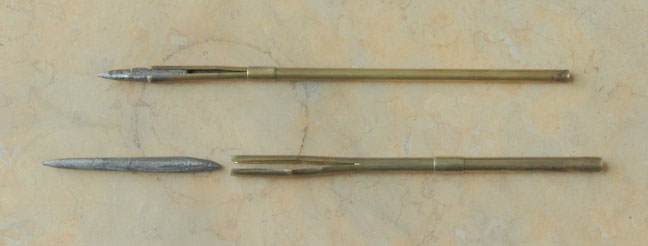
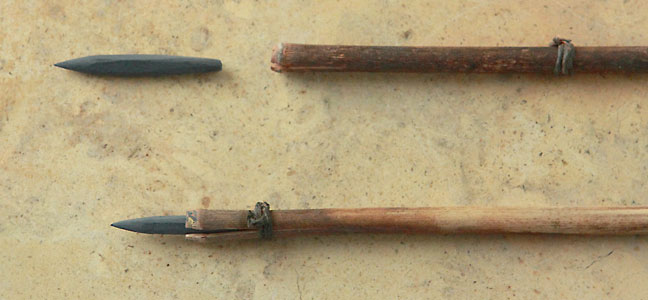
From his working translations of a variety of 15th to 17th century manuscripts, which detail the working practices of the early European artists, Mayhew has learned how best to quarry the natural red chalk, how to prepare the natural red chalk into suitable drawing sticks, and how to recreate the traditional tools that were used to hold the chalk in order to draw very precisely with it.

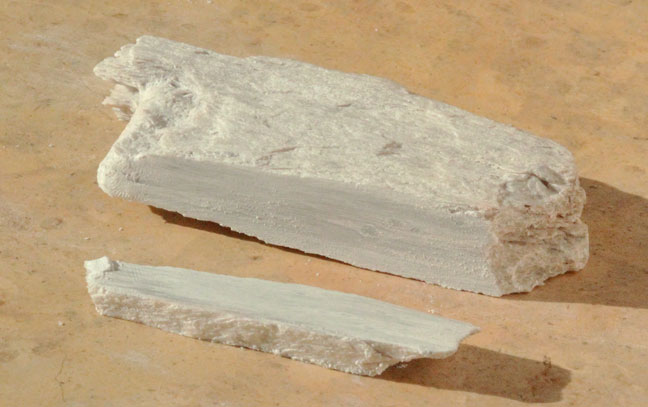
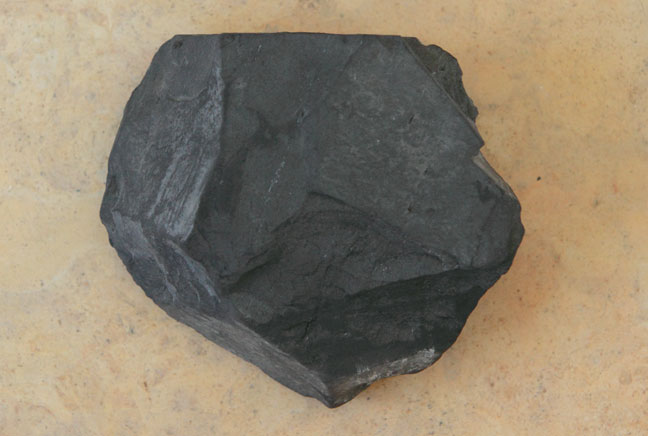
With the discovery of a modern source of natural red chalk, Mayhew has been able to revive the use of this beautiful, but lost, old master drawing medium for the first time since the late 1700s. According to museum curators, Mayhew’s discovery has made him the only living artist known to be working in this beautiful medium. Encouraged by this success, he has used the same approach to discover deposits of natural black chalk, another very widely used renaissance drawing medium that has also been lost over the years.

Metalpoint Drawing Materials and Techniques

Mayhew’s research at the National Gallery of Art eventually lead to his association in 1996 with the world-renowned Fogg Art Museum at Harvard University. Since that time, he has been working with the Fogg’s curators and conservators doing research on medieval and early renaissance metalpoint drawing materials and techniques. The old master drawing medium of metalpoint reached its peak of use in the 15th century. This complex technique is accomplished by drawing with a stylus made of solid metal upon a specially prepared support. The metal is left on the support in visible lines, and since these lines are made up of the pure metal, they will eventually change color as they take on beautiful metallic patinas over time.

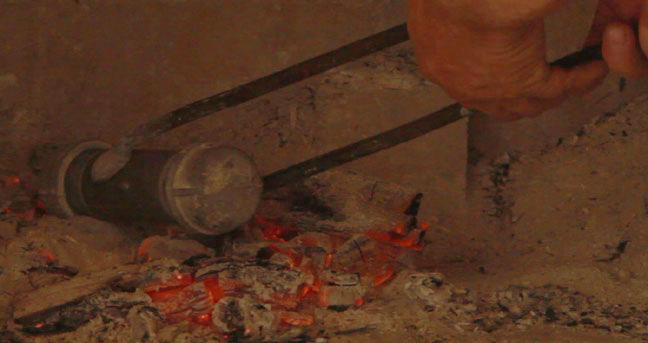
Although traditional renaissance metalpoint includes the use of metal styli such as silverpoint, goldpoint, bronzepoint, copperpoint, tinpoint, leadpoint and many others, the metals of these styli were usually much different alloys than are available today. For instance, in the 15th century there was a critical silver shortage throughout Europe. Because of this situation, all available silver was heavily alloyed with base metals. While this silver shortage was disastrous for the economy of the day, it may well have been fortuitous for the art of silverpoint drawing. The 15th century silver alloy forms a beautiful translucent warm golden patina, which is much different than pure silver will form. In addition, renaissance bronzes were lead-based alloys, used since classical times, and thus differ in formulation from modern bronze.

From translations of a variety of European artists’ manuscripts written in the 9th to 17th centuries, Mayhew has been able to determine the actual traditional metal alloys that were in use in those times. Using this information, he has been able to reproduce traditional renaissance metalpoint alloys.

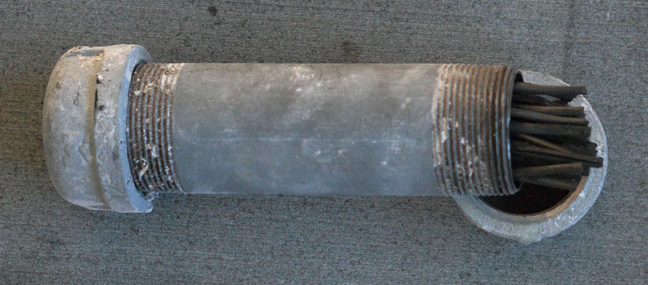
He has hand cast a wide variety of metalpoint styli based on traditional renaissance alloys, which he uses for his own drawings and studies. The traditional metalpoint styli that Mayhew has developed include:

Campanian Bronzepoint
Graecanic Bronzepoint
15th Century Silverpoint
Sterling Silverpoint
Fine Silverpoint
Electrum Goldpoint
Fine Goldpoint
Tertiariumpoint
Spanish Silver-leadpoint
Leadpoint
Copperpoint
Tinpoint.


From his experiences, he has found that styli cast from traditional renaissance alloys have better working properties and, over time, exhibit more interesting patina coloration than do styli made from modern metals and alloys.

However, the metalpoint styli are only part of the story of this complex drawing medium. Even more important are the special metalpoint preparations that coat the drawing supports, which make this fascinating technique work. Scouring those old master artists’ manuscripts, he has rediscovered numerous traditional renaissance and pre-renaissance formulas for the metalpoint support preparations. However, it took years of trial and error for him to learn how to prepare the unusual components and to determine the actual proportions of each based on the obscure archaic measurements in the references. However, he persisted in his efforts and he was eventually able to reproduce a wide variety of metalpoint support preparations based on the traditional materials and formulas in use during the height of the metalpoint era.

In the fall of 1998, Mayhew’s research, and the old master drawing materials he has developed, were included in a major exhibition of old master drawings at Harvard’s Fogg Art Museum. In this exhibition, the drawings of many old master artists, including Leonardo da Vinci, Ghirlandiao, Perugino, Carracci, Clouet and others, were exhibited along side the hand-cast metalpoint styli, metalpoint paper preparations, natural red chalk and other early renaissance drawing materials developed by Mayhew. In addition, he has donated an extensive inventory of the old master drawings materials that he has developed, known as the Mayhew Collection of Old Master Drawing Materials, to Harvard University’s Straus Center for Conservation. The curators and conservators use this collection for teaching purposes and for research on old master drawing media.

Mayhew has studied and adopted the working methods of Italian renaissance artists who thoroughly study their subject matter through detailed study, numerous drawings and even small oil studies before approaching the final painting. Using this approach allows him to truly understand his subject matter as he prepares for the work of the painting. Timothy chooses his artistic subjects from the landscapes, people and animals that he seeks out, and his sketches and drawings are always done in natural red chalk, natural black chalk, 15th century silverpoint, Campanian bronzepoint, Graecanic Bronzepoint, goldpoint and many other beautiful, but until now lost, old master drawing materials and techniques. Due to the skill of their rendering, and the fact that such beautiful and rare drawing media was used to create them, these drawings have become valued treasures amongst serious art collectors. Over the past several years, both the Boston Museum of Fine Art and Harvard University’s Fogg Art Museum have acquired numerous original metalpoint drawings done by Timothy, which are now housed as part of their permanent collection, both of which are world-renown for their collections of drawings by old master artists.

To see drawings by Timothy David Mayhew, which are done in a variety of old master drawings materials, follow this link:

drawings.